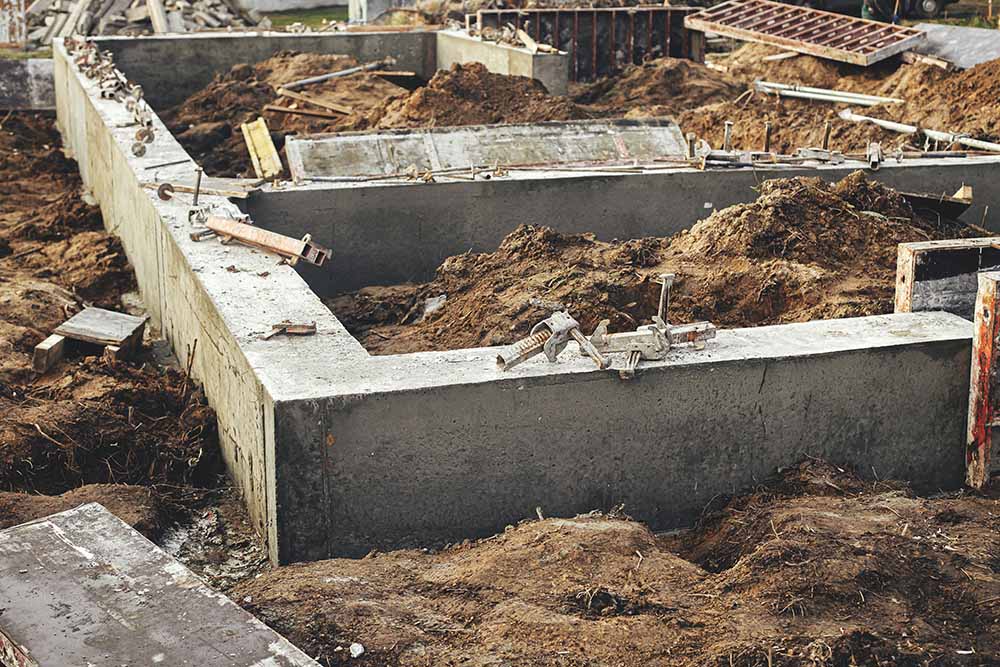
Noticing that your basement foundation walls are beginning to bow inward is one of the most alarming discoveries a homeowner can make. This structural distortion indicates that the hidden forces outside your home are slowly compromising the very stability of your entire residential structure.
Ignoring an inward curve in your basement masonry can lead to catastrophic framing shifts, severe wall cracking, and eventual structural collapse. Taking immediate action to understand and rectify this movement is essential to preserving your property’s long-term safety and financial value.
Hydrostatic Pressure and the Hidden Force of Water
The primary culprit behind bowing basement walls is the immense lateral pressure exerted by the soil surrounding your foundation. When heavy rain or melting snow saturates the earth, the ground expands significantly and pushes forcefully against the rigid subterranean masonry.
- Monitor the exterior drainage paths around your home to ensure that roof runoff is directed far away from the foundation perimeter.
- Clean your gutters regularly to prevent overflowing water from pooling directly against the basement walls.
- Recognize that clay-heavy soils retain water much longer than sandy soils, exponentially increasing the lateral force against your blockwork.
When this continuous external pressure exceeds the load-bearing capacity of the structural walls, the masonry inevitably begins to push and deflect inward.
Poor Exterior Grading and Surface Water Management
When the landscape surrounding your house slopes toward the foundation rather than away from it, gravity naturally directs all surface water straight toward your basement. This constant accumulation of water weakens the soil structure and creates localized pressure zones that punish your foundation walls day after day.
- Re-grade the soil around your home to establish a gentle, downward slope that channels rainwater away from the structure.
- Install dedicated extensions on your downspouts to carry roof water at least six feet away from the foundation line.
- Avoid planting heavy, water-loving shrubs or trees within close proximity to your exterior basement walls.
Correcting these basic surface drainage errors is a vital preventative step that immediately relieves the physical stress placed on your hidden masonry.
The Role of Heavy Equipment and Surcharge Loading
Sometimes, the excessive force pushing your walls inward is not just caused by nature, but by human activity and heavy objects placed near the home. Operating heavy construction machinery or parking large vehicles too close to the foundation line can cause sudden, irreversible structural shifting.
- Keep heavy trucks, recreational vehicles, and large trailers parked well away from your immediate home perimeter.
- Instruct construction or landscaping crews to avoid operating heavy skid-steers or excavators near the basement walls during remodeling projects.
- Understand that adding massive external features, like a brick patio or a concrete driveway right next to a vulnerable wall, adds severe surcharge weight.
Being mindful of the physical weight placed near your foundation prevents unexpected structural failures caused by artificial, external overloading.
Stabilizing and Straightening via Deep Underpinning
When a foundation wall has already suffered severe inward deflection, stabilizing the surface requires reaching deep down into solid, supportive earth strata. Professional underpinning functions by extending the depth or width of the foundation, anchoring your home to stable soil layers that do not shift with seasonal moisture changes.
- Excavate sections beneath the existing footing to pour robust, steel-reinforced concrete piers that lift and support the structural load.
- Drive heavy-duty steel push piers down into competent load-bearing strata until they reach solid bedrock or dense earth.
- Transfer the immense weight of the house off the failing, unstable soil and onto the newly installed engineered piers.
This advanced engineering method effectively halts the inward movement and provides the mechanical leverage required to gradually stabilize and straighten the bowing structure.
Supplementing Underpinning with Carbon Fiber Wall Straps
For a comprehensive structural solution, underpinning is frequently paired with interior wall reinforcement to guarantee that the masonry can never deflect inward again. Utilizing high-tensile carbon fiber straps or steel I-beams locks the existing blocks into a rigid, immutable position.
- Epoxie, incredibly strong carbon fiber straps vertically across the bowing sections to distribute the external pressure evenly across the wall.
- Secure the top and bottom of the reinforcing straps to the floor joists and the concrete slab for absolute structural resistance.
- Enjoy a low-profile reinforcement solution that can be easily painted over or hidden behind finished drywall.
Combining deep foundational support with internal wall bracing provides an absolute defense system that permanently eliminates future structural movement.
Securing Your Home with Permanent Structural Fortification
Investing in professional foundation restoration completely transforms the safety profile of your property by eliminating the terrifying risk of structural failure. This advanced engineered solution neutralizes the shifting soils, intense water pressure, and foundational weaknesses that cause masonry walls to buckle.
Do not allow minor inward wall deflections to silently mature into a total structural emergency that compromises your entire household. Prioritizing timely underpinning and wall stabilization ensures your basement remains a perfectly safe, dry, and structurally sound sanctuary for a lifetime.