Planning an exposed aggregate driveway cost Markham project? Homeowners in Markham face unique pricing considerations when choosing this popular decorative concrete option for their driveways.
This guide breaks down what you can expect to pay for exposed aggregate driveways in the Markham area. We’ll walk through the complete cost breakdown so you know exactly where your money goes, and explore the key factors that can push your final investment higher or lower. You’ll also get a side-by-side comparison with other driveway materials to help you decide if exposed aggregate fits your budget and style goals.
Understanding Exposed Aggregate Driveways in Markham
What Makes Exposed Aggregate Different from Regular Concrete
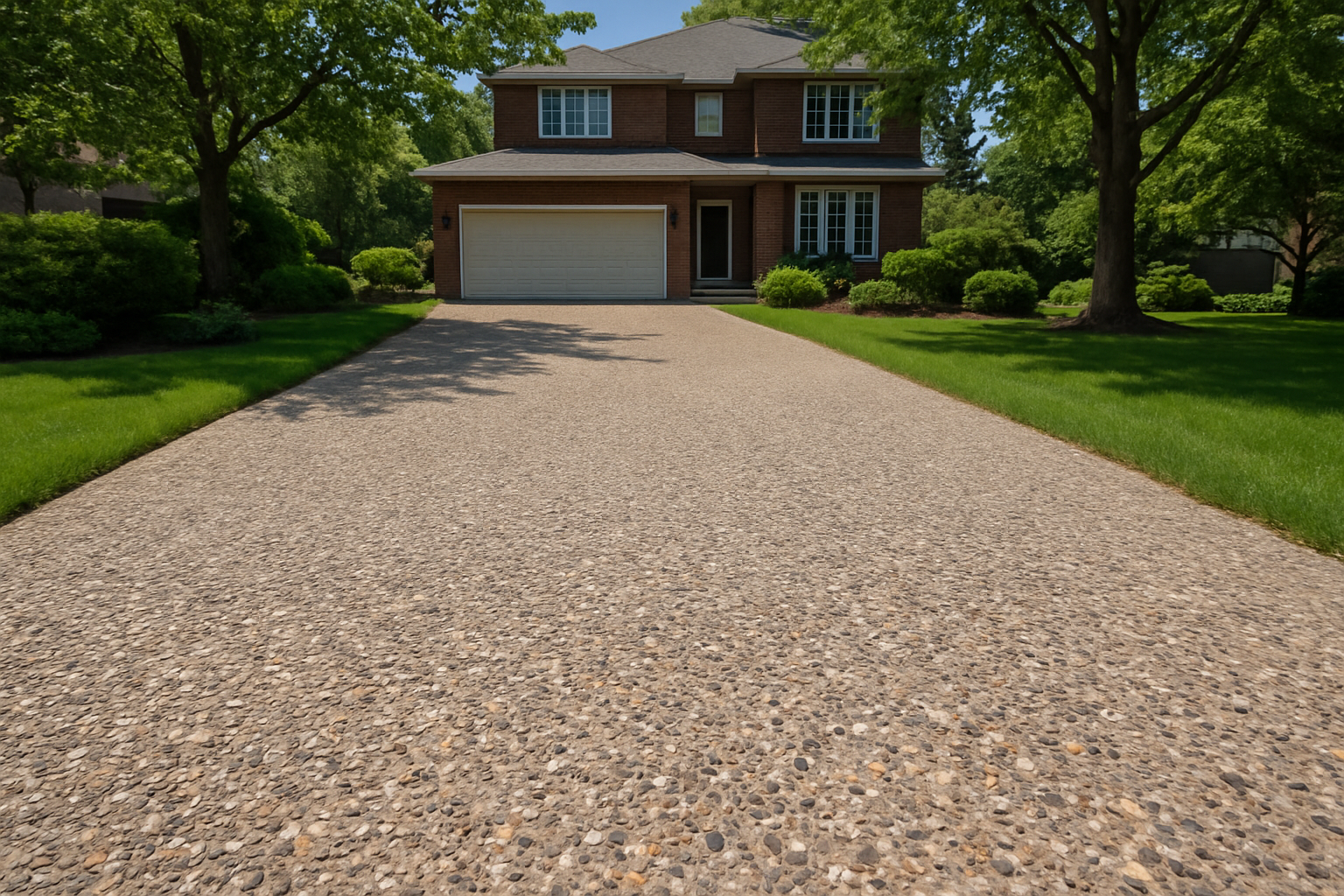
Exposed aggregate concrete stands apart from standard concrete through its unique finishing process and visual appeal. While regular concrete presents a smooth, uniform surface, exposed aggregate reveals the beautiful stones, pebbles, and decorative materials mixed within the concrete itself. The process involves pouring concrete with specially selected aggregates, then removing the top layer of cement paste before it fully cures. This technique exposes the colorful stones beneath, creating a textured, slip-resistant surface that’s both functional and attractive.
The aggregate materials can range from natural river rock and crushed granite to recycled glass and decorative stones. This variety allows homeowners to customize their driveway’s appearance to complement their home’s architecture and landscaping. Regular concrete, by contrast, relies on surface treatments like stamping or coloring to achieve visual interest, which can wear away over time.
Why Markham Homeowners Choose Exposed Aggregate
Markham residents gravitate toward exposed aggregate driveways for several compelling reasons. The material’s durability makes it particularly appealing in this area, where driveways endure heavy use and varying weather conditions throughout the year. Unlike asphalt that can crack and deteriorate under Ontario’s freeze-thaw cycles, exposed aggregate maintains its integrity and appearance for decades with proper installation.
The slip-resistant surface proves especially valuable during Markham’s snowy winters. The textured finish provides better traction for both vehicles and pedestrians compared to smooth concrete or sealed asphalt. This safety feature reduces the risk of accidents during icy conditions, making it a practical choice for families.
Property values in Markham continue to rise, and homeowners recognize that quality improvements like exposed aggregate driveways contribute to their home’s market appeal. The sophisticated appearance signals attention to detail and quality construction, factors that resonate with potential buyers in this competitive real estate market.
Climate Benefits for Ontario Weather Conditions
Ontario’s climate presents unique challenges that exposed aggregate driveways handle exceptionally well. The material’s porous nature allows for better water drainage compared to sealed surfaces, reducing the risk of ice formation and water pooling. During spring thaws and heavy rainfalls common in the region, this drainage capability prevents water from sitting on the surface and potentially causing damage.
The thermal properties of exposed aggregate also work in the homeowner’s favor. The varied stones absorb and release heat differently than uniform concrete, creating micro-variations in surface temperature that help prevent large ice sheets from forming. This natural de-icing effect reduces the need for harsh chemical treatments that can damage other driveway materials.
Freeze-thaw resistance represents another significant advantage. The aggregate stones within the concrete matrix help distribute stress more evenly when water freezes and expands within the material. This distribution prevents the large cracks that commonly plague other concrete surfaces in climates with significant temperature fluctuations like Markham experiences.
Aesthetic Appeal and Property Value Enhancement
Exposed aggregate driveways offer unmatched design flexibility that enhances curb appeal significantly. Homeowners can select from dozens of aggregate types, colors, and sizes to create a custom look that complements their home’s exterior and landscaping. Popular choices in Markham include warm river stones that pair well with brick homes, sleek granite chips for contemporary designs, and multicolored blends that work with various architectural styles.
The natural variation in the exposed stones creates visual depth and texture that photographs beautifully and maintains its appeal year-round. Unlike painted or stamped surfaces that can appear artificial, exposed aggregate looks authentically natural while still providing the durability needed for daily use.
Real estate professionals consistently note that quality driveways contribute to first impressions and overall property valuation. In Markham’s competitive housing market, where buyers often drive by multiple properties before deciding which ones to view, an attractive exposed aggregate driveway can make the difference between a showing and a pass. The investment typically returns 70-80% of its cost when homeowners sell, making it both a lifestyle improvement and a smart financial decision.
Cost Breakdown for Exposed Aggregate Driveways
Material Costs and Quality Options
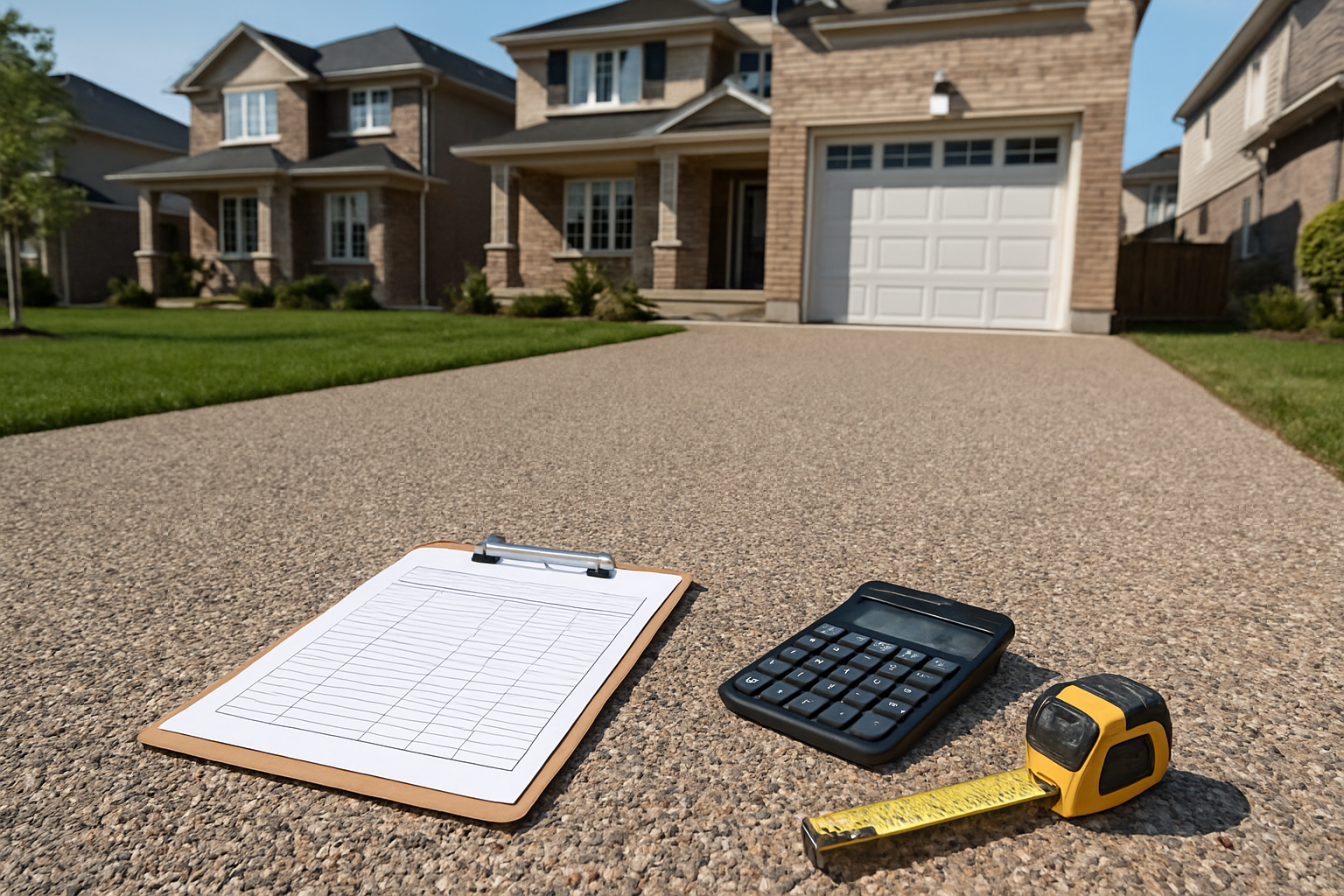
The foundation of your exposed aggregate driveway cost lies in material selection. Standard exposed aggregate mixes range from $85 to $120 per cubic yard in Markham, while premium options with decorative stones or colored aggregates can reach $150 to $200 per cubic yard. Basic gray concrete with standard gravel aggregates sits at the lower end, perfect for homeowners prioritizing function over aesthetics.
Upgrading to river rock, crushed granite, or recycled glass aggregates adds visual appeal but increases costs by 25-40%. Specialty aggregates like crushed marble or imported stones can double material expenses. The concrete base itself varies in quality – standard 3000 PSI concrete works for most residential applications, while 4000 PSI concrete offers enhanced durability for heavy-traffic areas.
Color additives range from $3 to $8 per square foot extra, depending on pigment quality and intensity. Integral coloring provides consistent hues throughout the concrete, while surface treatments create varied tones but wear over time.
Labor and Installation Expenses
Professional installation accounts for 60-70% of total project costs in Markham. Skilled concrete contractors charge $6 to $12 per square foot for basic exposed aggregate installation, with complexity driving prices higher. The multi-step process requires specialized equipment and timing precision.
Site preparation adds $2 to $4 per square foot, including excavation, grading, and base material installation. Proper sub-base preparation prevents future cracking and settling issues. Contractors typically charge separately for removal of existing driveways, ranging from $3 to $6 per square foot depending on material type and disposal requirements.
Sealing applications, essential for Markham’s freeze-thaw cycles, cost an additional $1.50 to $3 per square foot. Professional installation includes proper curing time and surface preparation before aggregate exposure.
Size and Square Footage Pricing
Driveway size significantly impacts per-square-foot pricing through economies of scale. Small driveways under 400 square feet often carry premium pricing of $12 to $18 per square foot due to minimum job requirements and setup costs. Standard residential driveways between 500-800 square feet see pricing drop to $8 to $14 per square foot.
Large installations exceeding 1,000 square feet benefit from bulk pricing, potentially reducing costs to $6 to $10 per square foot. Irregular shapes and narrow access areas increase labor time and equipment positioning challenges, adding 15-25% to standard rates.
| Driveway Size | Price Range per Sq Ft | Typical Total Cost |
|---|---|---|
| 200-400 sq ft | $12-18 | $2,400-7,200 |
| 500-800 sq ft | $8-14 | $4,000-11,200 |
| 1,000+ sq ft | $6-10 | $6,000-10,000+ |
Additional Features and Customization Costs
Decorative borders using contrasting aggregates or stamped patterns add $8 to $15 per linear foot. Popular options include brick-pattern borders or contrasting stone strips that frame the main driveway surface. These details require additional forming and precise installation techniques.
Heated driveway systems for snow melting range from $12 to $25 per square foot, transforming winter maintenance but requiring electrical upgrades and professional installation. Drainage solutions like channel drains or decorative catch basins cost $200 to $800 per linear foot, depending on complexity.
Lighting integration adds $150 to $400 per fixture, including electrical work. LED strip lighting along borders creates stunning evening aesthetics while improving safety and property value.
Hidden Fees and Permit Requirements
Markham building permits for driveway installations typically cost $200 to $500, depending on project scope and property zoning. Many contractors include permit acquisition in their quotes, but homeowners should verify this inclusion to avoid surprises.
Utility location services are mandatory before excavation, usually costing $50 to $150. Some contractors pass these fees directly to customers while others absorb them into project pricing. Soil testing may be required for properties with questionable drainage or stability, adding $300 to $600 to project costs.
Winter installation premiums of 15-30% apply to projects completed between November and March due to heating requirements and weather-related delays. Rush job surcharges can add 20% or more when homeowners need expedited completion timelines.
Factors That Influence Your Final Investment
Driveway Size and Shape Complexity
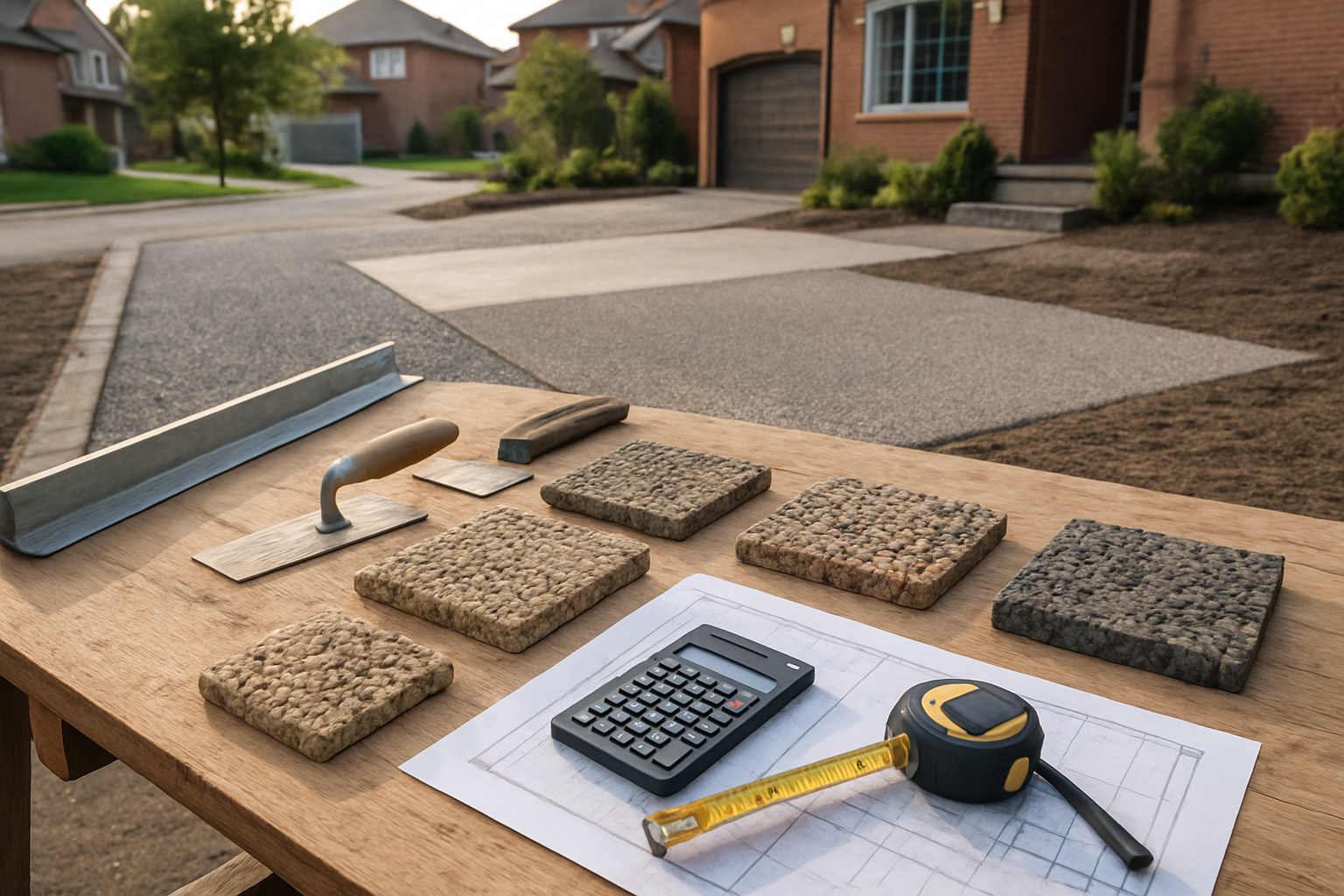
Square footage plays the biggest role in determining your exposed aggregate driveway cost. A standard single-car driveway typically measures 12×20 feet (240 square feet), while a double-car driveway averages 20×20 feet (400 square feet). Contractors usually charge between $12-$25 per square foot in Markham, so you’re looking at $2,880-$6,000 for a single-car driveway and $4,800-$10,000 for a double-car version.
Complex shapes and curves significantly bump up the price. Circular driveways, intricate borders, or custom patterns require additional formwork, precise measurements, and skilled craftsmanship. These design elements can add 15-30% to your base cost. Sloped driveways also present challenges, requiring extra preparation work and specialized techniques to prevent aggregate from washing away during the finishing process.
Site Preparation and Existing Surface Removal
The condition of your current driveway directly impacts preparation costs. Removing an existing asphalt driveway typically costs $2-$5 per square foot, while concrete removal runs $3-$7 per square foot due to the demolition complexity. Disposal fees for old materials add another $300-$800 depending on local dump rates.
Excavation depth matters too. Most exposed aggregate driveways need 6-8 inches of excavation for proper base installation. Rocky soil or poor drainage conditions require additional work like installing weeping tiles or extra gravel layers. Tree roots near the driveway area create obstacles that increase labor time and equipment needs.
Aggregate Stone Selection and Color Options
Your stone choice significantly affects the final price. Basic gray concrete with standard pea gravel represents the most economical option. Premium stones like river rock, crushed granite, or decorative glass beads can double your material costs. Imported stones or specialty aggregates from specific quarries command premium prices.
| Stone Type | Price Range (per sq ft) | Visual Appeal |
|---|---|---|
| Standard Pea Gravel | $12-$16 | Basic |
| River Rock | $16-$20 | Natural |
| Crushed Granite | $18-$22 | Premium |
| Decorative Glass | $20-$25 | Luxury |
Color additions through integral pigments or surface stains add $2-$4 per square foot. Multiple colors or complex patterns increase this cost further.
Seasonal Timing and Contractor Availability
Markham’s construction season runs from April through October, with peak demand during summer months. Spring and fall installations often cost 10-15% less due to reduced demand. Winter work is possible but requires special additives and heating techniques, potentially increasing costs by 20-30%.
Contractor schedules fill up quickly during peak season. Booking early secures better rates and preferred timing slots. Rush jobs or last-minute installations typically carry premium pricing of 15-25% above standard rates.
Comparing Exposed Aggregate to Alternative Driveway Materials
Cost Comparison with Asphalt and Stamped Concrete
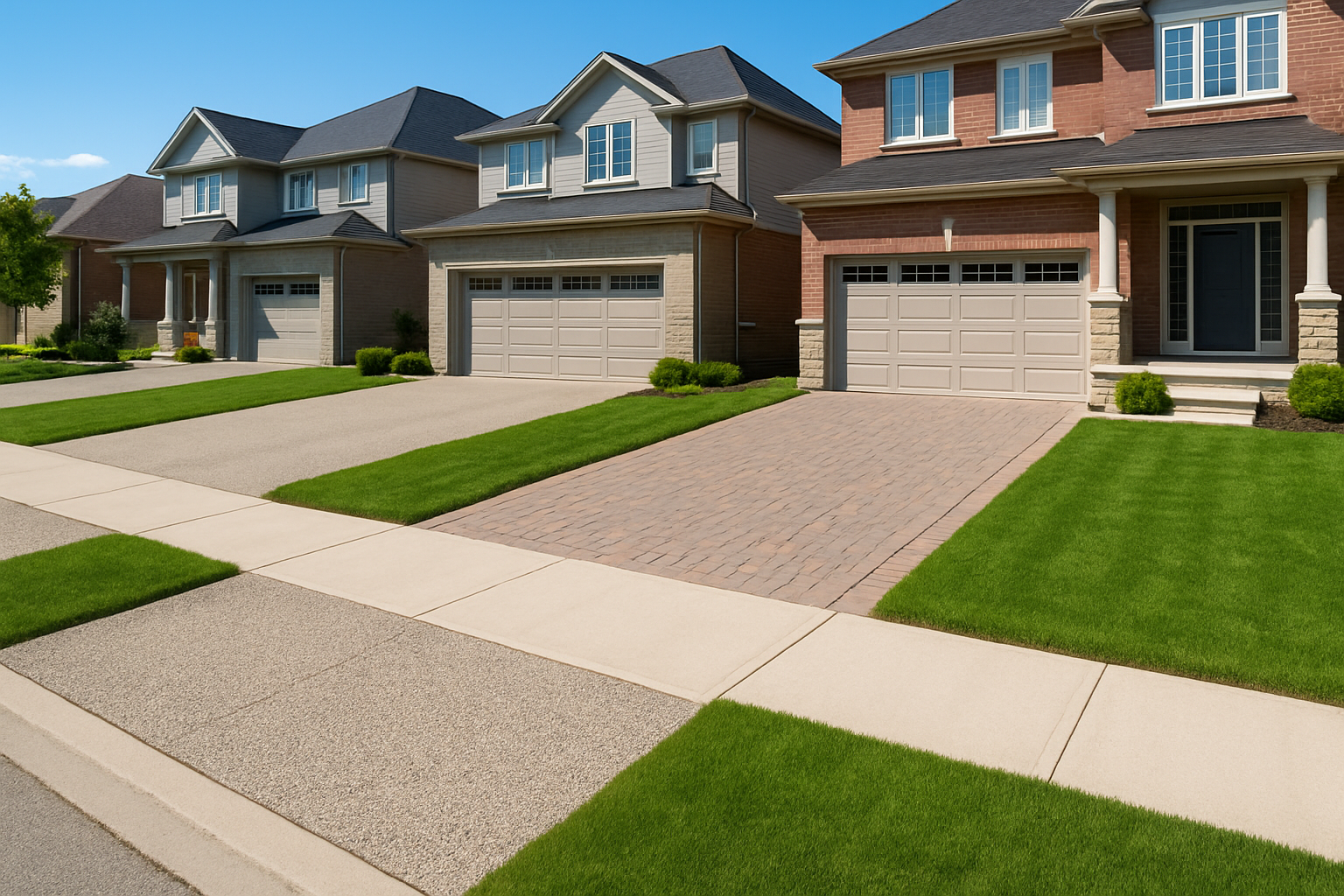
When choosing between exposed aggregate, asphalt, and stamped concrete for your Markham driveway, the upfront costs tell only part of the story. Here’s how these popular options stack up financially:
| Material | Cost per Square Foot (CAD) | Lifespan | Initial Investment (500 sq ft) |
|---|---|---|---|
| Asphalt | $8-15 | 15-20 years | $4,000-7,500 |
| Exposed Aggregate | $15-25 | 25-30 years | $7,500-12,500 |
| Stamped Concrete | $18-30 | 20-25 years | $9,000-15,000 |
Asphalt appears cheaper initially, but this lower price comes with trade-offs. You’ll need to seal it every 2-3 years and expect more frequent repairs. Stamped concrete costs more than exposed aggregate but requires specialized contractors and can crack more easily in Markham’s freeze-thaw climate.
Exposed aggregate sits in the middle ground for upfront costs but delivers superior longevity. The natural texture provides excellent traction during winter months, and the aggregate stones help resist wear from snowplows and de-icing salt.
Long-term Value and Durability Benefits
Exposed aggregate driveways shine when you look beyond the initial price tag. The durability advantage becomes clear over a 20-year period, where exposed aggregate typically outlasts asphalt by 5-10 years.
The secret lies in the construction method. Exposed aggregate creates a concrete base reinforced with decorative stones that become integral to the surface. This design distributes weight more effectively than standard concrete and handles temperature fluctuations better than asphalt.
Markham’s climate presents unique challenges with winter temperatures dropping below -20°C and summer highs reaching 30°C. Asphalt becomes soft in extreme heat and brittle in cold, leading to cracks and potholes. Exposed aggregate maintains structural integrity across these temperature swings.
Property value considerations matter too. Real estate professionals in the Greater Toronto Area consistently report that quality concrete driveways, including exposed aggregate, add more resale value than asphalt alternatives. Buyers appreciate the upscale appearance and reduced maintenance burden.
The aggregate stones themselves provide natural slip resistance, making exposed aggregate safer for pedestrians and vehicles during icy conditions. This safety feature reduces liability concerns and makes winter navigation more confident.
Maintenance Requirements and Associated Costs
Different driveway materials demand varying levels of ongoing attention and investment. Understanding these maintenance needs helps predict your total ownership costs over time.
Exposed Aggregate Maintenance:
- Resealing every 3-5 years ($1.50-2.50 per sq ft)
- Pressure washing annually ($150-300)
- Minor crack repairs as needed ($200-500)
- Annual maintenance cost: $200-400
Asphalt Maintenance:
- Seal coating every 2-3 years ($1.00-2.00 per sq ft)
- Crack filling seasonally ($150-400)
- Pothole repairs ($100-300 per repair)
- Complete resurfacing every 10-15 years ($6-10 per sq ft)
- Annual maintenance cost: $400-800
Stamped Concrete Maintenance:
- Resealing every 2-4 years ($2.00-3.50 per sq ft)
- Color touch-ups when needed ($300-600)
- Joint repairs for freeze damage ($250-500)
- Annual maintenance cost: $300-600
The maintenance schedule for exposed aggregate proves more forgiving than alternatives. The aggregate stones naturally hide minor stains and wear patterns that would be obvious on smooth concrete or asphalt surfaces. Snow removal causes less visible damage since the textured surface masks scrape marks from shovels and snow blowers.
Professional maintenance becomes less frequent with exposed aggregate compared to asphalt, which needs attention every few years to prevent deterioration. The concrete base resists oil stains better than asphalt, and when properly sealed, most automotive fluids can be cleaned with standard household cleaners.
Winter salt application, common in Markham, affects each material differently. Exposed aggregate handles road salt well due to proper drainage through the textured surface. Asphalt surfaces can become pitted from salt exposure, while stamped concrete may lose color definition over time.
Finding Qualified Contractors in Markham

Licensing and Insurance Requirements in Ontario
When hiring contractors for your exposed aggregate driveway in Markham, checking their credentials comes first. Ontario requires contractors to carry Workplace Safety and Insurance Board (WSIB) coverage, which protects you from liability if someone gets hurt on your property. Ask to see their WSIB clearance certificate – legitimate contractors won’t hesitate to show this documentation.
General liability insurance is equally important. Your contractor should carry at least $2 million in coverage to protect against property damage or accidents during construction. Don’t just take their word for it; request a certificate of insurance directly from their provider.
Many municipalities in the GTA require business licenses for contractors. While Markham doesn’t mandate specific contractor licensing, reputable companies often register with professional associations like the Concrete Ontario or the Ontario Stone, Sand & Gravel Association. These memberships signal commitment to industry standards and ongoing education.
Getting Accurate Quotes and Avoiding Lowball Estimates
Quality exposed aggregate work requires skill, time, and premium materials. When quotes seem too good to be true, they usually are. Professional contractors typically charge $12-$18 per square foot for exposed aggregate driveways in Markham, depending on complexity and site conditions.
Detailed quotes should break down:
- Site preparation and excavation costs
- Base material specifications and quantities
- Concrete mix details (aggregate type, PSI rating)
- Labor costs for placement and finishing
- Sealing and curing timeline
- Cleanup and disposal fees
Red flags include contractors who quote over the phone without site visits, demand full payment upfront, or pressure you to sign immediately. Professional contractors provide written estimates within 48-72 hours after measuring your property and discussing your preferences.
Get at least three quotes from different contractors to establish a realistic price range. The middle quote often represents fair market value, while extremely low bids typically mean corners will be cut somewhere.
Checking References and Portfolio Reviews
Smart homeowners verify contractor performance before signing contracts. Ask for recent customer references from the past two years, specifically requesting contacts who had similar driveway projects completed. Most satisfied customers happily share their experiences when contacted respectfully.
Review online presence across multiple platforms:
- Google Business reviews and ratings
- Better Business Bureau complaints and resolutions
- HomeStars or similar contractor rating websites
- Social media pages showing completed projects
Ask to see physical examples of their work in nearby neighborhoods. Driving by completed projects gives you insight into their finishing quality and attention to detail. Look for consistent color distribution, clean edges, and smooth transitions between different surface textures.
Professional contractors maintain photo portfolios showcasing various aggregate styles, colors, and project scales. They should explain their process, timeline expectations, and how they handle weather delays or unexpected site conditions.
Understanding Warranties and Workmanship Guarantees
Quality contractors stand behind their work with comprehensive warranties covering both materials and labor. Standard exposed aggregate warranties should include:
Material Coverage:
- 25-year warranty on concrete structural integrity
- 5-year coverage against premature scaling or spalling
- 2-year guarantee on exposed aggregate retention
Workmanship Protection:
- 3-5 year guarantee against settling or cracking
- Coverage for drainage issues related to improper grading
- Protection against color inconsistencies or finishing defects
Read warranty terms carefully. Some contractors exclude damage from de-icing salts, while others provide specific maintenance guidelines you must follow. Understand what actions void your warranty protection.
Get everything in writing before work begins. Verbal promises mean nothing when problems arise months later. Professional contractors provide detailed contracts outlining warranty coverage, maintenance requirements, and resolution procedures for any issues that develop.
Keep documentation including photos of completed work, warranty certificates, and contractor contact information. This paperwork becomes valuable if warranty claims become necessary down the road.
Maximizing Your Driveway Investment
Timing Your Project for Best Pricing
Fall and early spring offer the best opportunities to save money on exposed aggregate driveway installation in Markham. Contractors typically have more availability during these seasons and may offer discounts of 10-20% compared to peak summer rates. Weather conditions during these periods are also ideal for concrete curing, which means better long-term results.
Winter installations come with risks but can sometimes yield significant savings. The key is ensuring temperatures remain above freezing for at least 72 hours after installation. Some experienced contractors offer winter deals with guarantees, but always verify their cold-weather installation expertise.
Avoid scheduling your project during the peak construction season from May through August when demand peaks and prices soar. Many homeowners rush to complete projects during nice weather, creating a seller’s market for contractors.
Book your project at least 6-8 weeks in advance to secure better rates and ensure availability with quality contractors. Last-minute bookings often result in premium pricing or settling for less experienced installers.
Maintenance Tips to Extend Lifespan
Regular sealing every 2-3 years protects your exposed aggregate surface from moisture penetration and freeze-thaw damage common in Markham’s climate. Quality sealers cost $150-300 for an average driveway but prevent costly repairs that can reach thousands of dollars.
Clean your driveway monthly using a pressure washer set to medium intensity. High-pressure settings can dislodge aggregate stones and damage the surface. For stubborn stains, use specialized concrete cleaners rather than harsh chemicals that can weaken the binding agents.
Address small cracks immediately before they expand during winter freeze cycles. Minor crack repairs cost $50-150 per crack, while major resurfacing can cost $8-12 per square foot.
Remove snow and ice carefully using plastic shovels or rubber-tipped tools. Metal shovels can chip the surface, and rock salt accelerates concrete deterioration. Instead, use calcium chloride or sand for traction.
Avoid parking heavy vehicles like moving trucks or construction equipment on your driveway for extended periods. The concentrated weight can create permanent impressions or cracks.
Financing Options and Payment Plans
Many Markham contractors offer flexible payment structures to help manage the upfront investment. Standard payment schedules typically require 10-20% down, 40-50% at project midpoint, and the remainder upon completion. This protects both parties and helps you spread costs over the 2-4 week installation period.
Home equity lines of credit (HELOC) provide attractive financing for driveway projects since they’re considered home improvements that increase property value. Current rates often beat personal loan options by 2-4 percentage points.
Some contractors partner with financing companies offering specialized home improvement loans with terms ranging from 12-84 months. Interest rates vary from 6-15% depending on your credit score and loan term.
Credit cards with promotional 0% APR periods can work for smaller projects under $15,000, but make sure you can pay the balance before the promotional rate expires.
| Financing Option | Typical Rate | Best For | Terms |
|---|---|---|---|
| HELOC | 3-7% | Large projects | 5-30 years |
| Personal Loan | 8-18% | Quick approval | 2-7 years |
| Contractor Financing | 6-15% | Convenience | 1-7 years |
| 0% Credit Cards | 0-25% | Short-term | 6-21 months |
Consider the tax implications of your financing choice. Interest on home improvement loans secured by your property may be tax-deductible, while credit card interest is not.
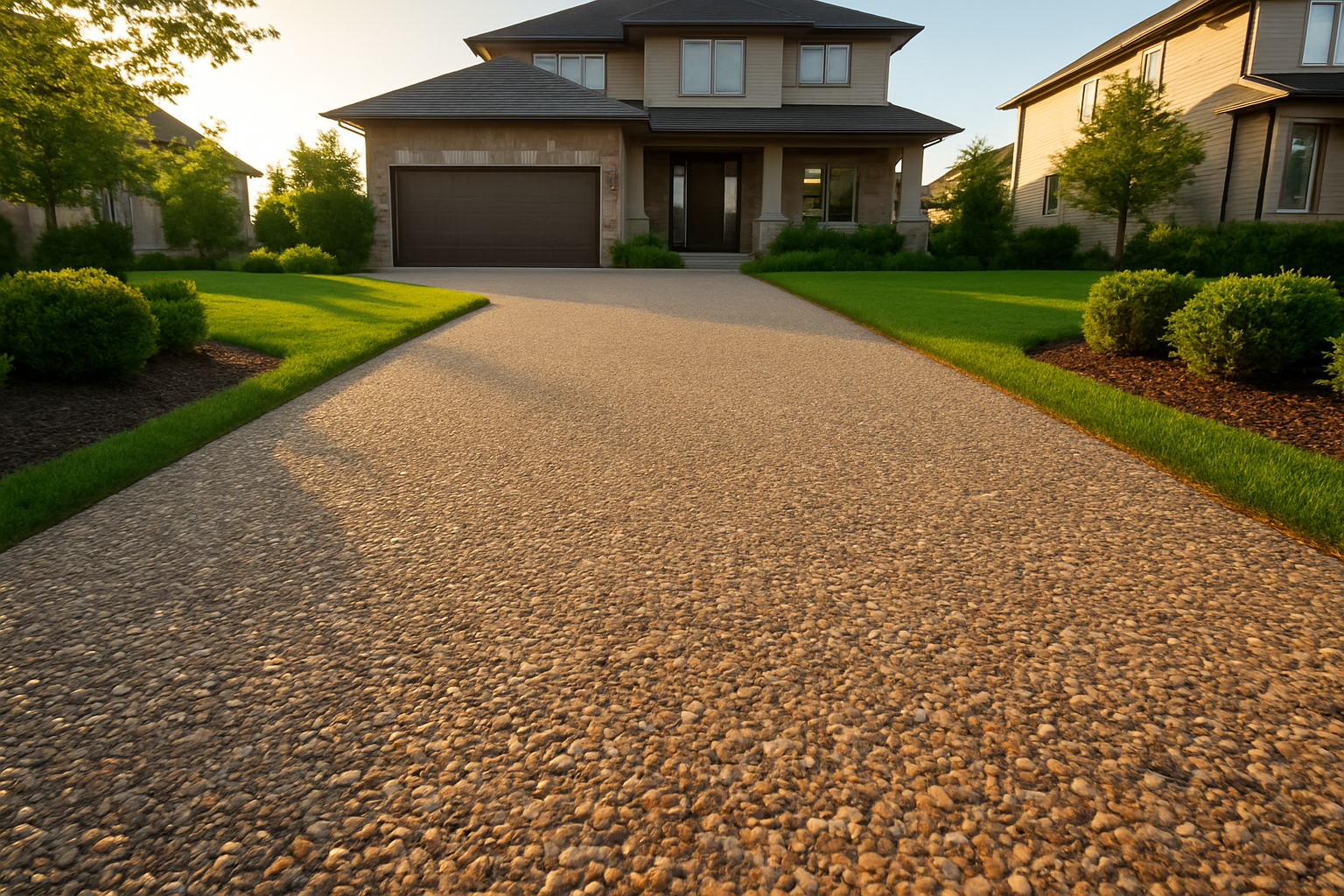
Getting an exposed aggregate driveway in Markham means balancing cost with long-term value. The typical investment ranges from moderate to higher-end depending on your specific needs, but the durability and curb appeal make it worth considering. Key factors like driveway size, site preparation requirements, and chosen aggregate style will shape your final budget, so getting detailed quotes from multiple contractors helps you plan accurately.
Your driveway represents a significant investment in your home’s functionality and appearance. Take time to research local Markham contractors, compare their portfolios, and ask about warranties before making your decision. A quality exposed aggregate driveway can serve your family for decades while boosting your property value, making the upfront cost a smart long-term choice for most homeowners.