
Have you ever wondered why some modern buildings stay comfortable year-round with minimal energy costs while others struggle with heating and cooling bills?
Insulated Concrete Formwork represents a revolutionary approach to construction that answers this challenge. This innovative method combines insulating materials with structural concrete to create highly efficient building envelopes.
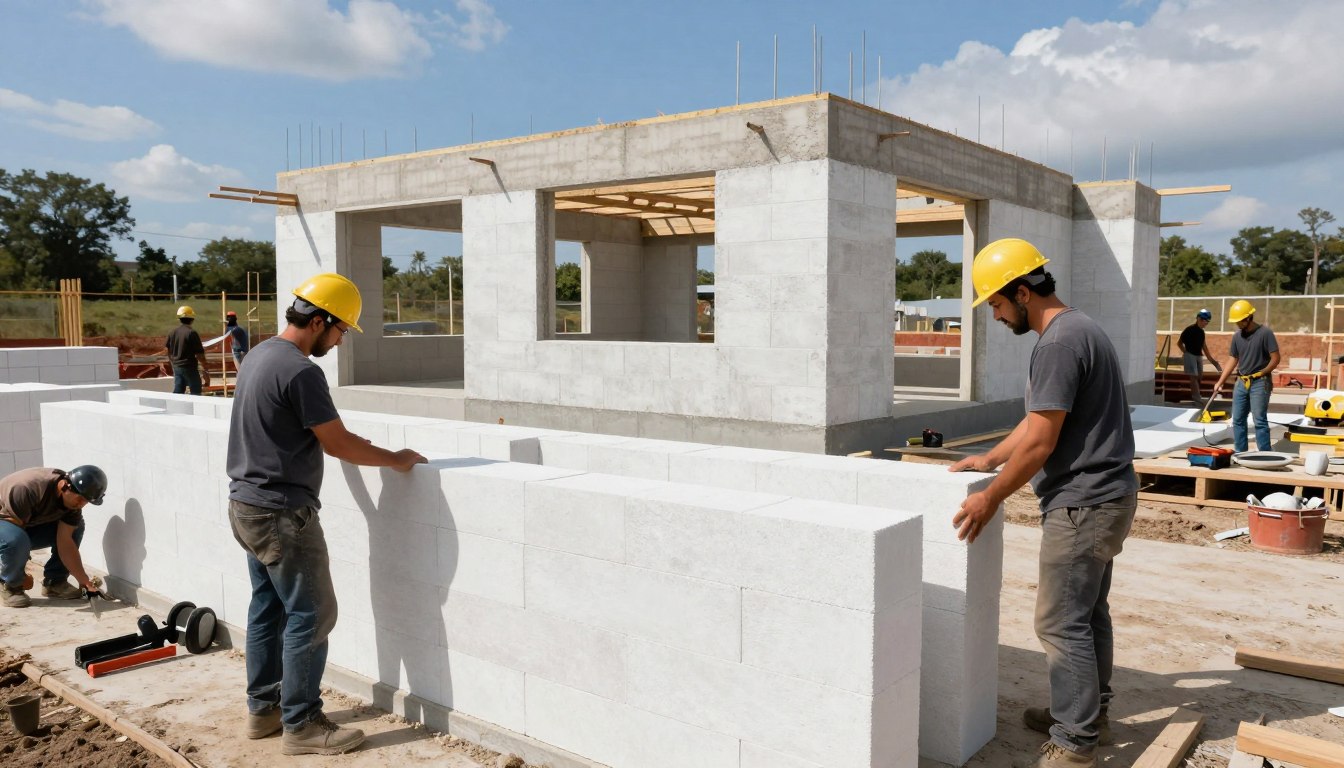
The system uses lightweight blocks made from two layers of insulation. Workers stack and lock these blocks together like building bricks. Once positioned, the hollow core gets filled with concrete, forming a durable, energy-efficient shell.
This construction technique has gained significant recognition as a Modern Method of Construction. It’s growing rapidly in popularity across Canadian markets for both residential homes and commercial structures.
The approach follows a fabric-first philosophy, prioritizing thermal performance from the very beginning. This strategy dramatically reduces heating and cooling demands throughout the building’s lifespan.
Understanding how Insulated Concrete Forms work provides the foundation for appreciating their numerous advantages. These benefits include superior energy performance, exceptional structural integrity, and streamlined construction efficiency.
Understanding ICF Fundamentals
The core principle behind insulated concrete form systems involves creating permanent insulating layers that remain part of the finished wall structure. These innovative building systems combine insulating materials with structural concrete to form highly efficient exterior walls.
What Are Insulated Concrete Forms?
Insulated concrete forms consist of hollow blocks or panels made from insulating materials like expanded polystyrene. Builders assemble these forms on-site, reinforce them with steel, and fill the cavity with concrete.
Three main types of ICF systems dominate the market. EPS panel systems feature two polystyrene sheets connected by metal or plastic ties. Moulded expanded polystyrene blocks arrive pre-formed from the factory. Woodcrete forms blend natural wood with cement and water.
The Modern Construction Process with ICF Systems
The construction method with these forms simplifies traditional techniques. Workers stack blocks together without mortar using their interlocking design. This system proves easy to learn for both apprentices and experienced contractors.
Once the hollow forms are in place, steel reinforcement gets added. Concrete then pours into the central cavity to create structural walls. Unlike traditional concrete forms that require removal, ICF blocks remain permanently.
The finished system delivers continuous insulation wrapping the building inside and out. These forms work seamlessly with standard construction materials including doors, floors, and roofs. The composite wall system combines the strength of concrete with the thermal performance of insulation.
Benefits of Insulated Concrete Forms in Modern Construction
The exceptional energy-saving capabilities of insulated concrete forms make them a standout choice in modern sustainable building practices. These systems deliver remarkable advantages that transform how buildings perform throughout their lifespan.
Energy Efficiency and Reduced Heat Loss
Insulated concrete form construction achieves superior energy efficiency through continuous insulation surrounding the concrete core. This design eliminates thermal bridging common in traditional walls.
The fabric-first approach prioritizes five key areas: insulation quality, U-values, airtightness, thermal bridging elimination, and occupant comfort. This strategy ensures maximum thermal performance from the start.
ICF walls typically provide insulation values exceeding R-20, with some systems reaching R-23. These ratings surpass ASHRAE/ANSI 90.1 energy code requirements. The airtight construction maintains consistent indoor temperatures year-round.
Homeowners experience significant cost savings on heating and cooling bills. The reduced energy consumption translates to lower operational costs over the building’s lifetime.
Improved indoor air quality results from the tight building envelope blocking pollutants and allergens. The combination of dense concrete and insulation also provides excellent soundproofing benefits.
Exploring what is icf: Design, Performance, and Installation
Beyond their thermal performance benefits, insulated concrete forms offer architects and builders unprecedented creative freedom in structural design. This innovative approach combines material efficiency with architectural versatility.
Material Choices and Insulation Options
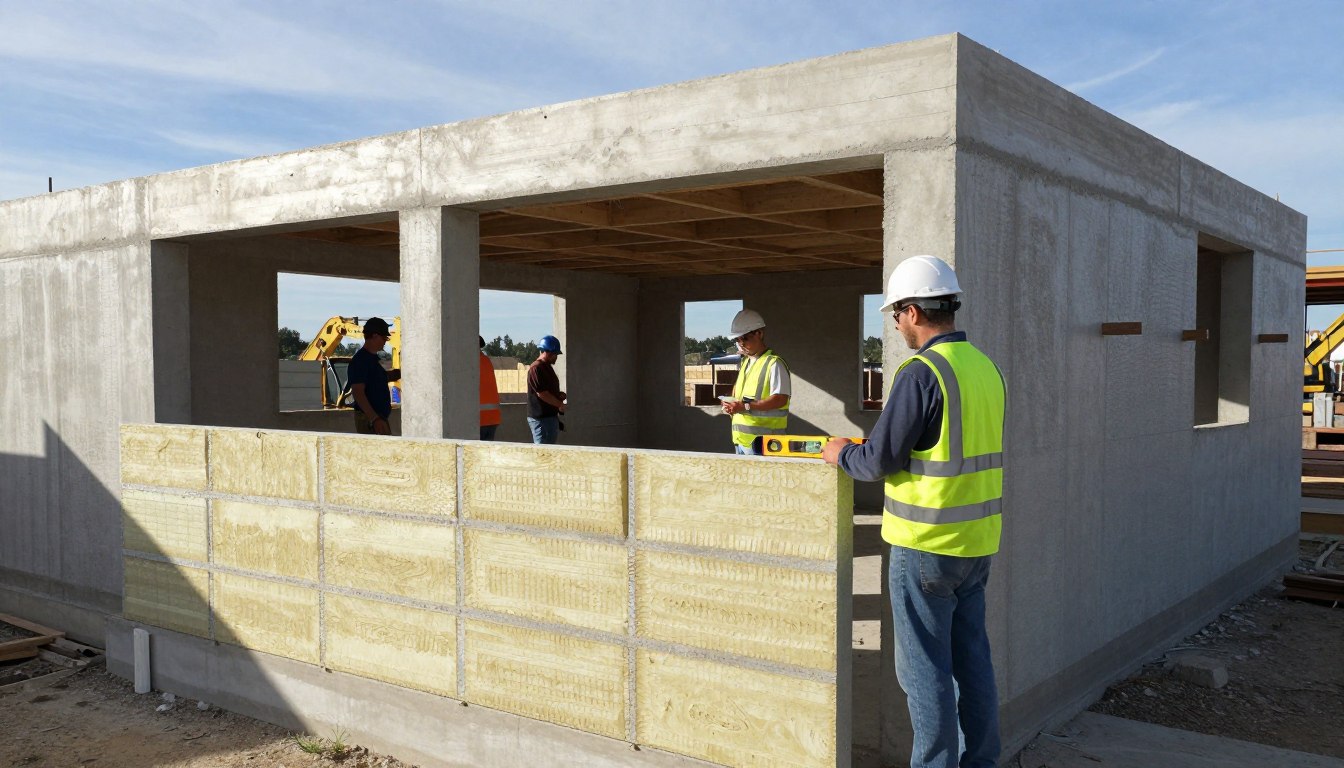
Builders can select from various material systems to suit specific project requirements. Expanded polystyrene panels provide excellent insulation values and ease of handling.
Moulded blocks offer consistent performance characteristics across different applications. Woodcrete units blend natural materials with modern construction needs.
Each material choice affects insulation efficiency and structural capacity. The selection process considers compatibility with finishing materials and architectural details.
Flexibility for Diverse Architectural Designs
The installation process follows clear, manageable steps that streamline construction. Workers stack lightweight blocks by hand, reducing equipment needs.
This method accommodates traditional farmhouse styles and contemporary curved walls. Complex features like corner windows become simpler to implement.
The same system works for above-ground walls and below-ground foundations. This consistency simplifies material procurement and accelerates build timelines.
A wide range of facing materials can be applied to achieve desired aesthetics. Brick, stone, render, or aluminum panels create beautiful finishes without compromising performance.
Comparing ICF Foundations and Poured Concrete Foundations
The foundation decision significantly impacts a building’s long-term performance. ICF systems offer distinct advantages over conventional poured concrete foundations.
Thermal Performance, Strength, and Moisture Resistance
ICF foundations achieve remarkable thermal efficiency with R-values exceeding 20. This outperforms poured concrete foundations that typically rate below R-3.
The continuous insulation creates an effective thermal barrier. This design eliminates cold bridges common in traditional systems.
Compressive strength doubles in ICF foundations due to superior concrete curing. The protective forms also shield against moisture intrusion and cracking.
Construction Speed and Durability Factors
ICF systems streamline construction by combining formwork and insulation in one step. Concrete can be poured in temperatures as low as 5°F.
These foundations demonstrate exceptional disaster resistance. Steel-reinforced walls withstand extreme winds exceeding 200 mph.
Long-term cost benefits emerge from reduced energy consumption and minimal maintenance. The integrated approach delivers superior durability for modern buildings.
Conclusion
Canadian builders are increasingly adopting ICF construction methods for their proven long-term benefits and sustainability. This innovative approach combines structural strength with superior insulation in integrated building systems.
The technology delivers exceptional energy efficiency, enhanced durability, and design flexibility that traditional methods cannot match. Whether for foundations or complete structures, these forms meet demanding Canadian building standards.
Initial investment in this construction approach pays dividends through reduced energy costs and minimal maintenance. Occupants enjoy improved comfort and safety throughout the building’s lifespan.
As sustainability becomes more crucial, ICF technology plays a growing role in residential and commercial projects. Working with experienced contractors ensures optimal performance from these advanced systems.
Understanding this modern construction method empowers better decisions for stronger, more efficient buildings.
FAQ
How do insulated concrete forms improve energy efficiency?
Insulated concrete forms create a continuous thermal barrier around the entire structure. This design drastically reduces heat loss in winter and heat gain in summer. The expanded polystyrene insulation stays in place permanently, leading to significant savings on heating and cooling costs.
Are ICF walls stronger than traditional wood-frame walls?
Yes, ICF walls are exceptionally strong. The combination of reinforced concrete and steel rebar results in a monolithic wall system with superior strength. These walls offer outstanding resistance to severe weather, including hurricanes and tornadoes.
What is the installation process like for an ICF foundation?
The installation process involves interlocking the lightweight foam blocks, which act as the concrete form. After placing steel rebar for reinforcement, concrete is poured into the cavity. The forms remain in place, serving as insulation on both sides of the concrete wall once it cures.
Can ICFs be used for complex architectural designs?
Absolutely. Insulated concrete form systems are highly adaptable. The blocks can be easily cut and shaped on-site to accommodate curves, arches, and unique angles. This flexibility makes them a great choice for modern construction and custom home designs.
How does the moisture resistance of ICF foundations compare to poured concrete?
ICF foundations provide superior moisture control. The solid concrete core acts as a robust barrier against water intrusion. Combined with proper exterior waterproofing, this method creates a drier, healthier basement environment compared to standard poured concrete foundations.
What are the key material differences between various ICF brands?
The primary differences often lie in the type of foam insulation and the web or tie system that connects the panels. Some systems use expanded polystyrene (EPS), while others may use different materials. The web design impacts the overall thermal performance and structural integrity of the finished wall.