
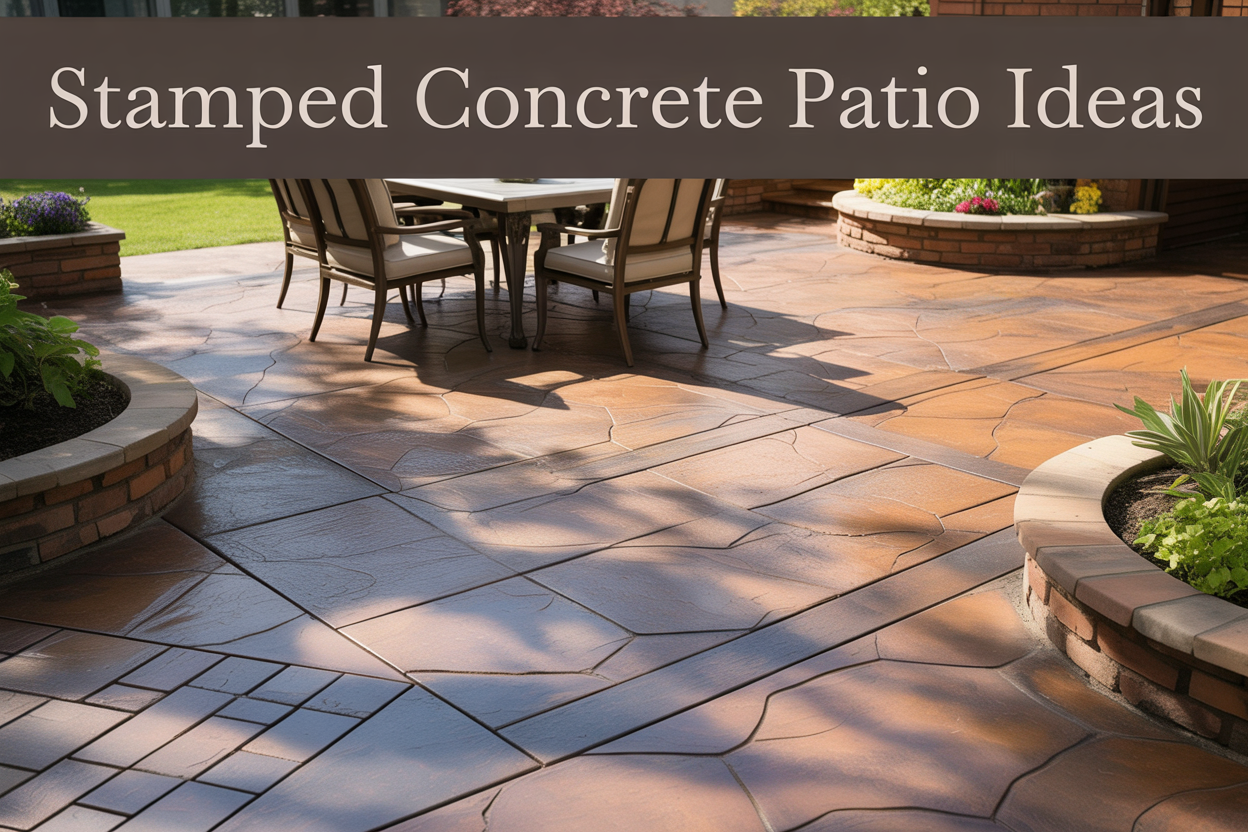
Transform your outdoor space with stamped concrete patio ideas that deliver style and durability without breaking the bank. This guide is perfect for homeowners planning a new patio or looking to upgrade their current outdoor living area.
Stamped concrete gives you the high-end look of natural stone, brick, or wood at a fraction of the cost. You can customize everything from intricate patterns to bold color combinations that complement your home’s style.
We’ll explore the most popular stamped concrete patterns that work beautifully for patios, plus smart color choices that can completely transform your backyard. You’ll also discover how different sizes and layouts can maximize your space and create the perfect outdoor entertaining area.
Popular Stamped Concrete Patterns for Patios
Natural Stone Textures That Mimic Expensive Materials
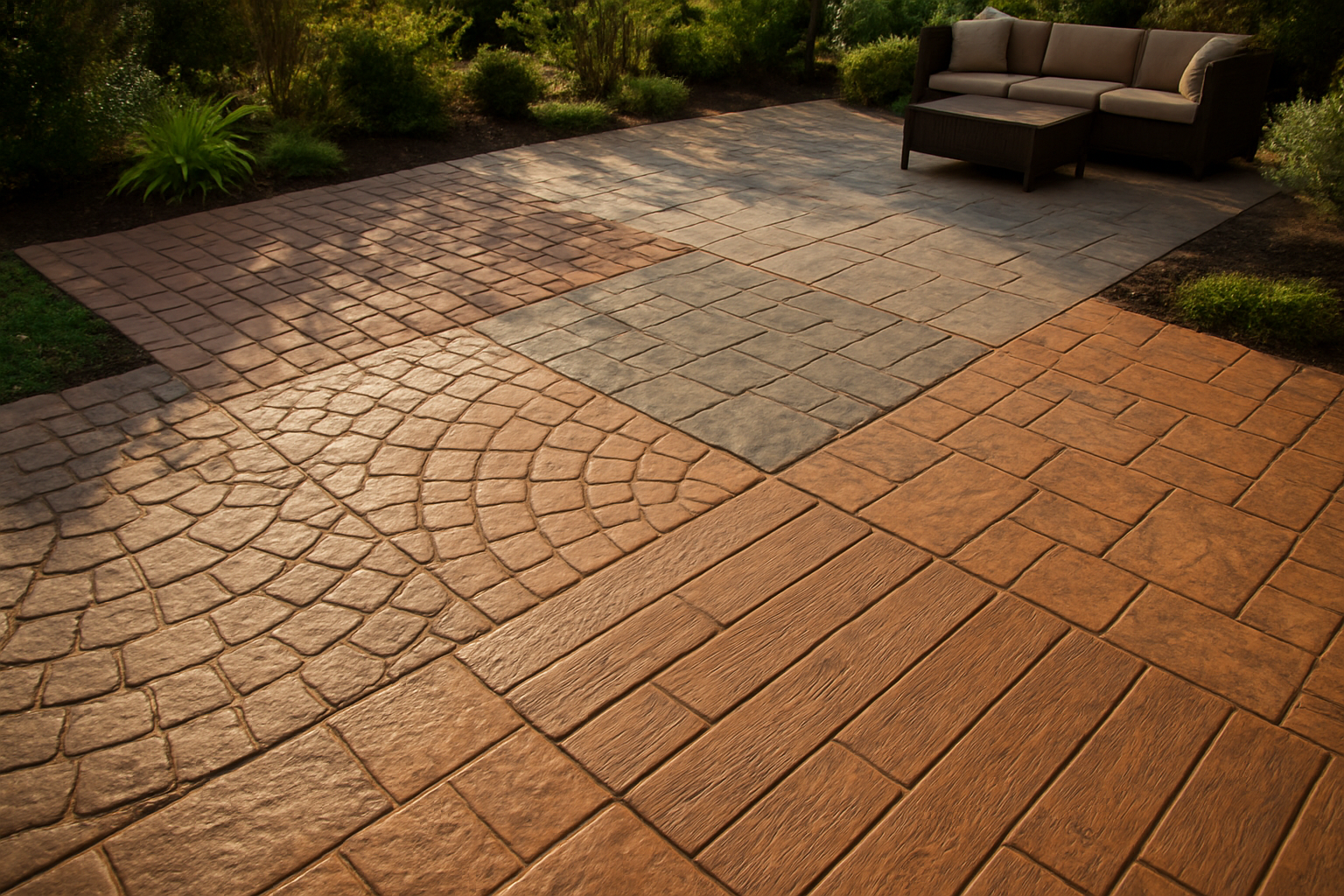
Stamped concrete can replicate the look of premium natural stones at a fraction of the cost. Popular options include slate patterns that create sophisticated surfaces with their characteristic irregular edges and subtle texture variations. Flagstone designs offer another excellent choice, featuring organic shapes that blend seamlessly with outdoor landscapes while providing the durability concrete offers.
Fieldstone patterns work particularly well for patios that need to complement existing stone elements around your property. The random, weathered appearance adds character without overwhelming the space. Ashlar stone patterns provide a more refined look with their rectangular shapes and clean lines, perfect for homes with traditional or contemporary architecture.
Wood Grain Patterns for Rustic Appeal
Wood-look stamped concrete brings warmth to outdoor spaces without the maintenance headaches of real timber. Boardwalk patterns create linear designs that can make patios appear larger when aligned properly with sight lines. These patterns work especially well for homes with natural or farmhouse styling.
Plank patterns offer versatility in orientation – running them parallel to your home creates a sleek, extended appearance, while perpendicular placement adds visual width to narrow spaces. Hand-hewn wood textures provide deeper grain patterns and knot details that closely mimic reclaimed lumber, giving your patio an authentic rustic character that pairs beautifully with outdoor furniture in natural tones.
Brick and Cobblestone Designs for Classic Charm
Traditional brick patterns never go out of style and work with virtually any home design. Running bond patterns create clean, orderly lines that feel both classic and contemporary. Herringbone brick designs add visual interest through their diagonal arrangement, creating movement that draws the eye across the patio surface.
Cobblestone patterns bring old-world European charm to modern outdoor spaces. These rounded, irregular shapes create texture underfoot and visual depth that photographs beautifully. Fan patterns using cobblestone stamps work particularly well for curved patio edges or around circular features like fire pits.
Geometric and Modern Abstract Patterns
Contemporary homes benefit from geometric stamped concrete patterns that complement clean architectural lines. Large format tile patterns create expansive looks perfect for minimalist outdoor designs. Diamond patterns add sophistication while maintaining geometric precision.
Abstract textures like seamless slate or smooth river rock patterns provide subtle visual interest without competing with modern furniture or architectural features. These patterns work especially well when combined with integrated lighting or water features that highlight the concrete’s texture variations.
Color Options and Combinations That Transform Your Space
Earth Tones for Natural Integration
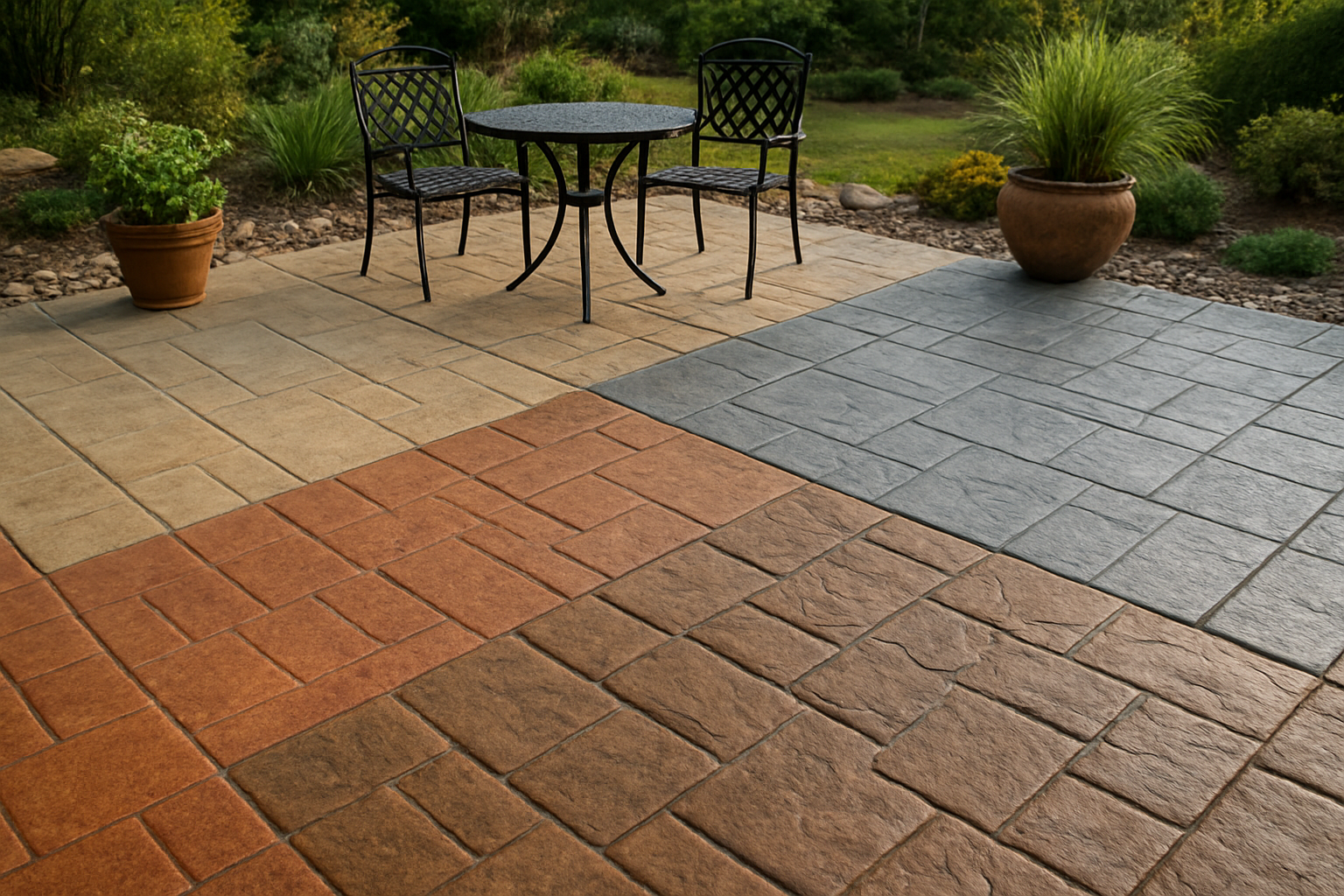
Natural earth tones create a seamless transition between your home and outdoor landscape, making your patio feel like a genuine extension of nature. Popular choices include warm sandstone, rich terracotta, and subtle gray tones that complement existing stone work or natural surroundings. These colors work especially well with traditional brick homes, natural wood siding, or stone exteriors.
Buff and tan shades offer incredible versatility, blending beautifully with both warm and cool architectural elements. They hide dirt and stains better than lighter colors while maintaining an elegant, timeless appearance. Desert sand and adobe hues bring southwestern charm to any space, while slate gray provides a sophisticated backdrop for outdoor furniture and plantings.
Consider your regional climate and natural surroundings when selecting earth tones. Warmer climates benefit from lighter browns and beiges that reflect heat, while cooler regions can handle deeper chocolate or charcoal tones that absorb solar warmth during shorter seasons.
Bold Colors for Statement Making
Vibrant concrete colors transform ordinary patios into stunning focal points that reflect your personality and design preferences. Deep reds create dramatic impact and pair beautifully with neutral home exteriors, while forest greens complement lush landscaping and traditional architecture.
Royal blues and navy tones offer unexpected sophistication, especially when combined with white or cream accent colors in outdoor furniture and accessories. These bold choices work particularly well around swimming pools or water features, creating visual continuity throughout your outdoor space.
Burgundy and wine shades provide rich, luxurious appeal without overwhelming smaller patio areas. These colors age gracefully and maintain their visual interest across different seasons and lighting conditions. When choosing bold colors, sample them in various lighting conditions since concrete appears different in morning sun versus evening shade.
Multi-Color Blends for Visual Depth
Combining multiple colors creates sophisticated depth and visual texture that single-color applications simply cannot achieve. Popular combinations include warm browns with golden highlights, creating natural stone-like variation that adds authentic character to your patio surface.
Two-tone applications using complementary colors like gray and tan create subtle contrast while maintaining overall harmony. Apply the darker color as your base with lighter accent tones highlighting raised pattern areas for enhanced dimensional appearance.
Three-color blends offer the most dramatic results but require careful planning to avoid overwhelming your space. Start with a neutral base color, add a secondary tone for depth, and finish with strategic accent highlights. Popular combinations include:
- Sandstone base with terra cotta secondary and cream highlights
- Gray foundation with brown undertones and charcoal accents
- Tan primary with rust secondary and gold highlight touches
Consider your patio size when planning multi-color applications. Larger spaces handle more complex color schemes, while smaller patios benefit from simpler two-tone approaches that create interest without visual chaos.
Size and Layout Configurations for Maximum Impact
Small Patio Designs That Maximize Space
Compact patios demand strategic planning to create the illusion of more space while maintaining functionality. Diagonal stamped concrete patterns work wonders for smaller areas, drawing the eye outward and making boundaries feel less restrictive. Ashlar slate patterns with their irregular stone shapes create visual interest without overwhelming limited square footage.
Consider using lighter-colored stamped concrete with subtle texture variations. Buff tones, light gray, or cream colors reflect more light and open up tight spaces. Border treatments also add sophisticated detail – a contrasting border in a complementary pattern like running bond can frame your space beautifully while defining distinct areas for dining or lounging.
Multi-level designs maximize vertical space when horizontal room is limited. A small raised section for seating paired with a lower main area creates depth and visual layers. Built-in planters integrated directly into the stamped concrete design eliminate the need for separate containers while adding greenery without sacrificing floor space.
Large Format Layouts for Expansive Areas
Spacious patios offer exciting opportunities for bold pattern combinations and dramatic design elements. Large ashlar patterns with 3-foot by 4-foot sections create striking impact across wide expanses. Wood plank stamping in 8-inch to 12-inch widths mimics expansive deck boards and works particularly well for entertaining areas.
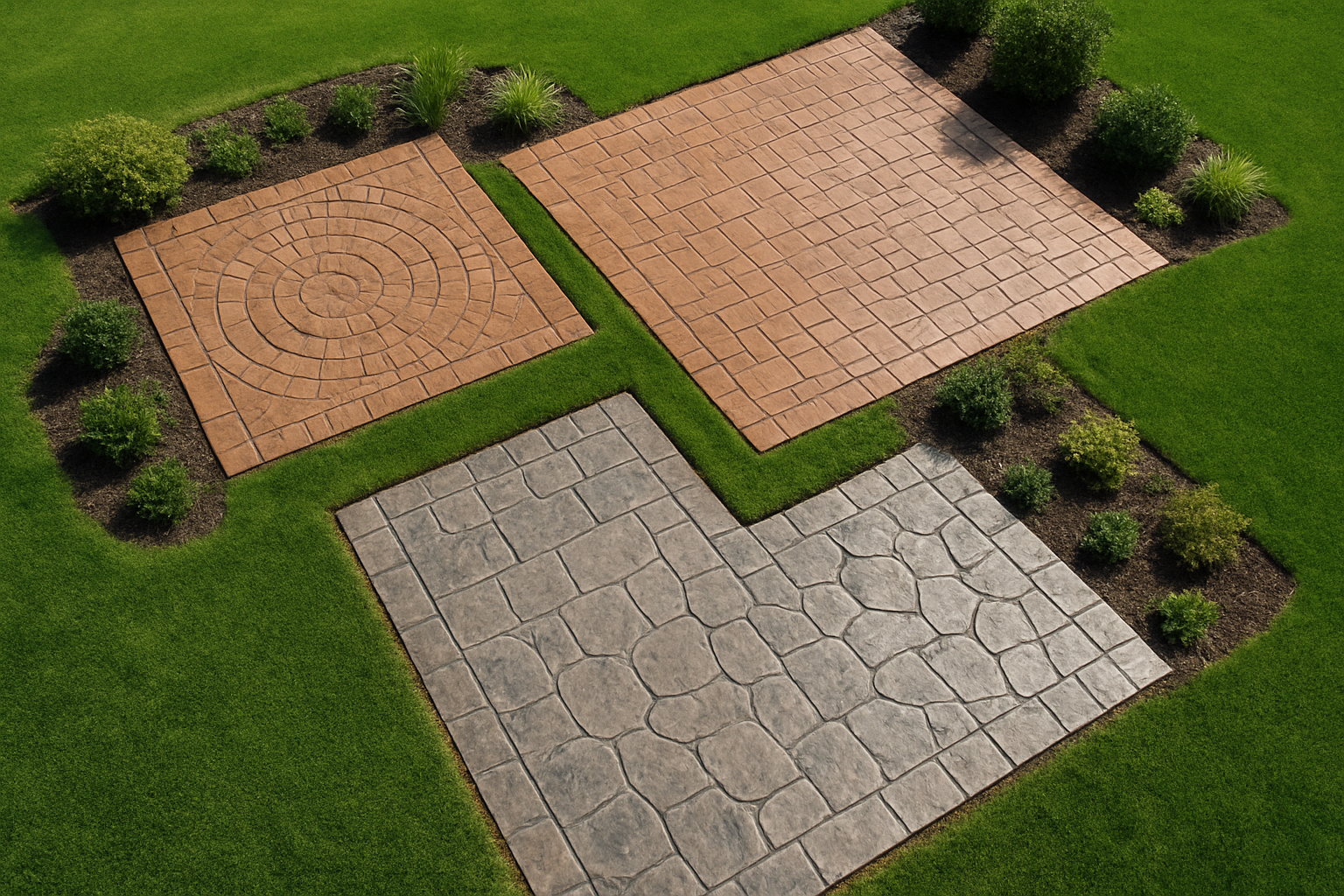
Consider zoning large patios into distinct functional areas using different stamp patterns or colors. The main gathering space might feature a classic cobblestone pattern, while a separate dining area showcases elegant flagstone stamping. Transition strips between zones create natural flow while maintaining visual separation.
Geometric patterns like hexagon or herringbone designs become showstoppers when given room to develop across large surfaces. These complex patterns need adequate space to establish their rhythm and create the desired visual impact. Large patios also accommodate multiple color variations within a single design theme.
Creative Shapes Beyond Traditional Rectangles
Curved patios embrace natural landscape flow and create organic gathering spaces. Kidney-shaped or free-form designs complement garden beds and existing trees while avoiding the rigid feel of straight lines. Stamped concrete adapts beautifully to curved forms, with patterns like random stone or European fan particularly suited to organic shapes.
Circular patios centered around fire features or water elements create intimate conversation areas. The radial stamping technique allows patterns to flow naturally from a central point outward, reinforcing the circular design concept. Semi-circular designs work well against house foundations or property lines.
L-shaped configurations maximize corner spaces and create natural divisions between different activity zones. One arm might serve as a dining area while the other accommodates lounge seating. This shape works especially well with running bond or stretcher bond patterns that can turn corners gracefully.
Octagonal and other geometric shapes add architectural interest and complement homes with similar design elements. These shapes require careful planning to ensure pattern alignment and proper joint placement at corners.
Integration with Existing Landscape Features
Smart patio design works with established landscape elements rather than fighting against them. Existing mature trees become natural focal points when patios flow around their root systems. Create circular cut-outs with decorative rings, allowing tree roots proper space while maintaining design continuity.
Grade changes present opportunities rather than obstacles. Stamped concrete can step down hillsides or create terraced levels that follow natural contours. Retaining wall integration allows seamless transitions between elevation changes while providing built-in seating or planting areas.
Water features like existing pools, ponds, or drainage areas can be incorporated into stamped concrete designs through careful pattern selection and color coordination. Slate or flagstone patterns complement water features naturally, while earth-tone colors create cohesion with surrounding plantings.
Rock outcroppings and natural stone formations inspire stamped concrete pattern choices. Matching or complementing existing stone with similar textures creates visual harmony. Natural fieldstone patterns work particularly well when real stone features are already present in the landscape.
Garden bed integration requires flexible design thinking. Curved stamped concrete edges can follow planting bed contours, while rectangular beds might inspire geometric pattern choices that echo their structured lines.
Design Styles to Match Your Home’s Architecture
Contemporary Minimalist Approaches
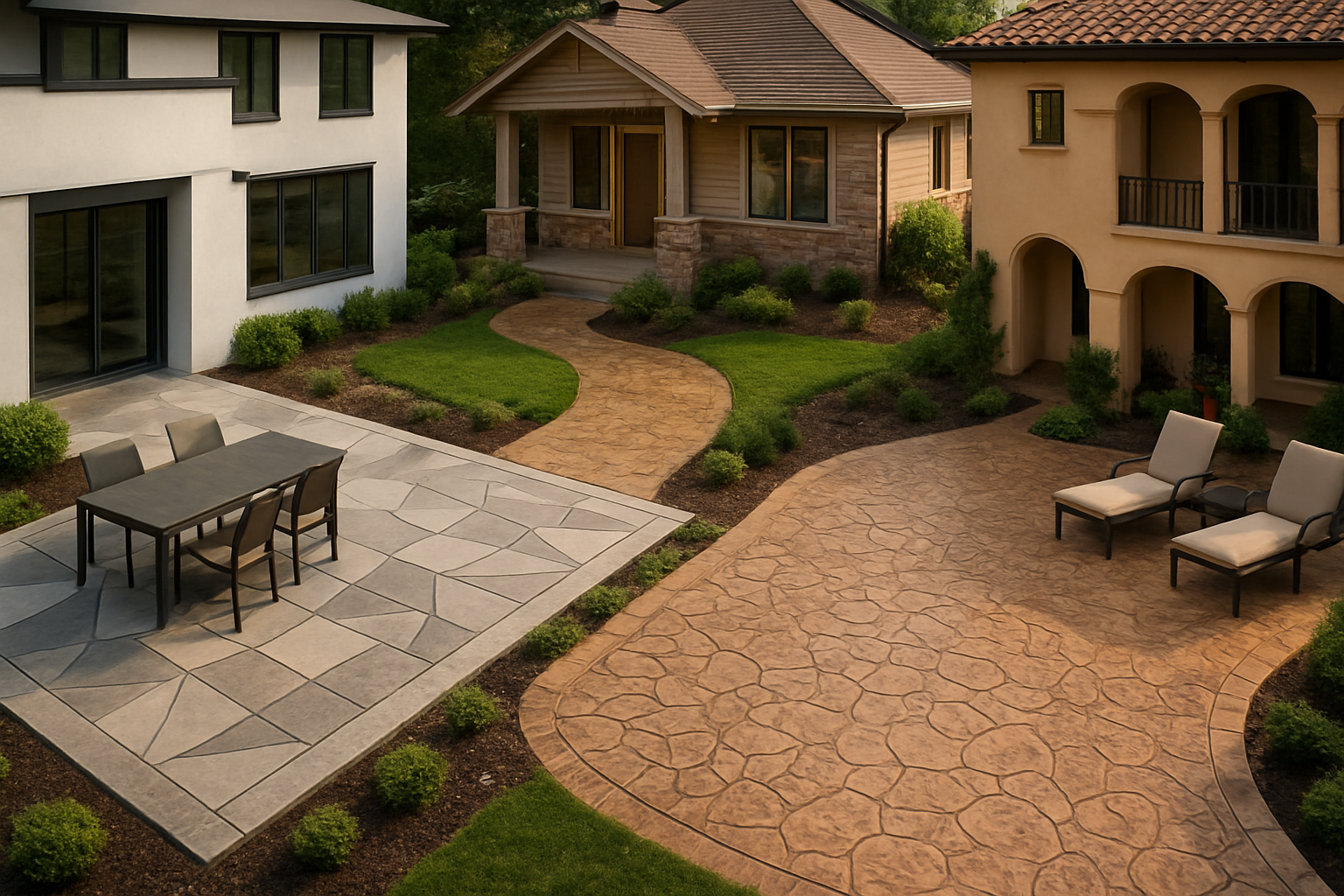
Clean lines and neutral tones define contemporary minimalist stamped concrete patios that work beautifully with modern home designs. Large-format stamped patterns like sleek wood plank or ashlar slate create expansive surfaces with minimal visual interruption. Choose subtle textures that mimic smooth limestone or polished concrete for a sophisticated look that doesn’t compete with your home’s architectural features.
Color palettes lean toward grays, charcoals, and warm whites, often incorporating single accent colors for visual interest. Geometric patterns with straight edges complement the angular features common in contemporary architecture. Consider seamless transitions between indoor and outdoor spaces by matching your patio’s color scheme to interior flooring materials.
Borders should remain understated – thin bands of contrasting color or simple scored lines work better than ornate decorative elements. The goal is creating a harmonious backdrop that enhances your home’s modern aesthetic without overwhelming it.
Traditional and Classic Designs
Traditional homes call for stamped concrete patterns that echo timeless materials and established design principles. Brick patterns remain incredibly popular, offering the classic appeal of fired clay without the maintenance headaches. Herringbone and basketweave layouts add visual texture while maintaining the refined look that complements colonial, craftsman, and tudor-style architecture.
Natural stone patterns work exceptionally well with traditional designs. Flagstone, cobblestone, and random stone textures create authentic-looking surfaces that feel like they’ve been part of your landscape for decades. Earth-tone colors – warm browns, deep reds, and muted golds – harmonize with traditional home exteriors and established landscaping.
Consider incorporating decorative borders that feature contrasting patterns or colors. A soldier course border around a herringbone field creates definition, while compass medallions or corner flourishes add elegant focal points that traditional architecture often celebrates.
Mediterranean and Southwestern Influences
Mediterranean and Southwestern architectural styles invite warmer, more vibrant stamped concrete designs that reflect their cultural origins. Terra cotta, sandstone, and saltillo tile patterns capture the essence of these regional styles while providing durability that natural materials sometimes lack.
Color choices should embrace the warm palette associated with desert and coastal Mediterranean environments. Rich oranges, deep reds, golden yellows, and earthy browns create the sun-soaked appearance that defines these architectural styles. Multiple color releases can create the weathered, aged appearance that adds authenticity to the design.
Curved elements work particularly well with these styles. Circular or serpentine borders, rounded corners, and flowing transitions between different patio levels mirror the organic shapes found in Mediterranean courtyards and Southwestern compounds. Consider incorporating decorative elements like stamped Spanish tiles or geometric patterns inspired by Native American or Moorish designs to strengthen the cultural connection.
Cost-Effective Benefits Over Alternative Patio Materials
Long-Term Durability Advantages
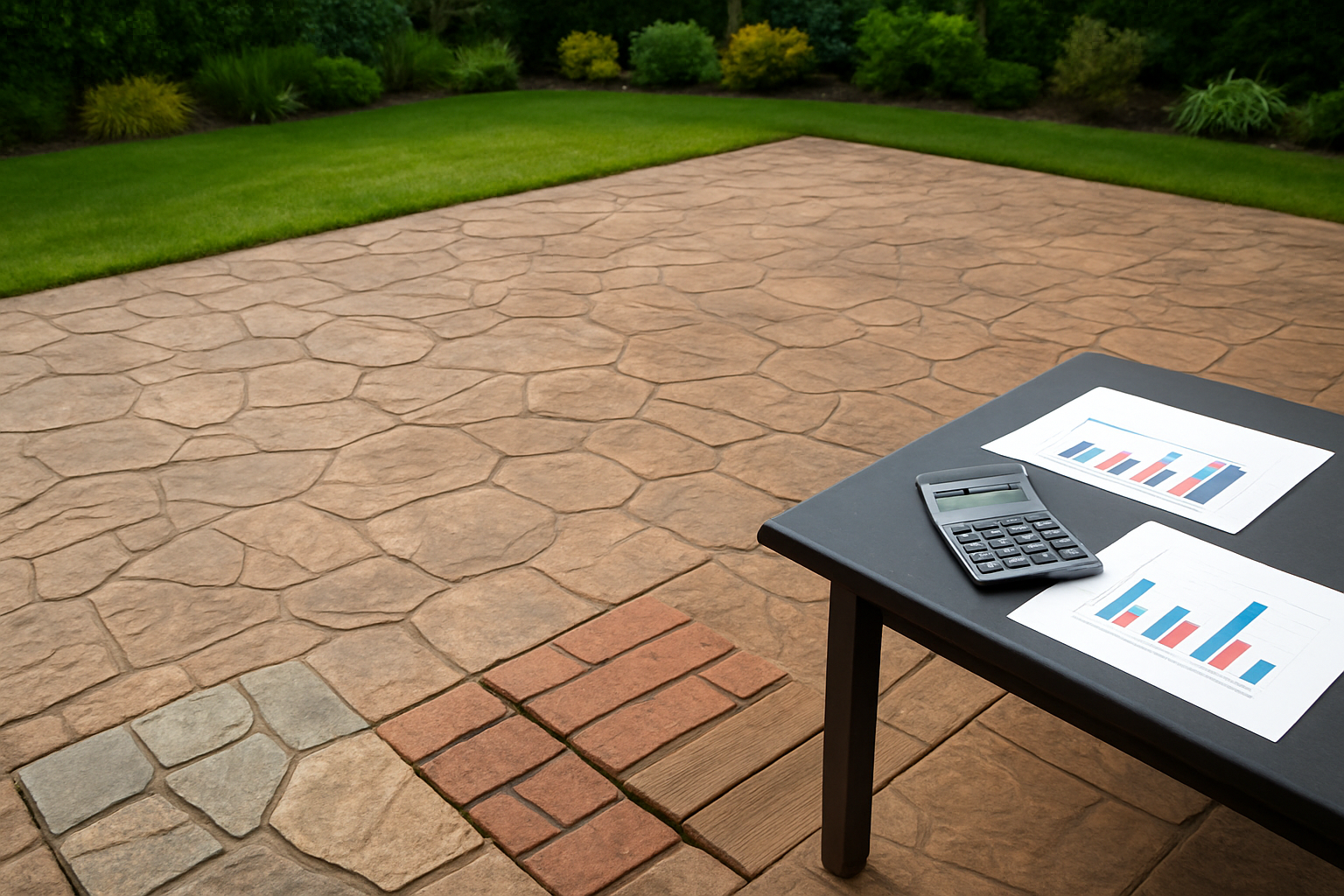
Stamped concrete delivers exceptional longevity that puts other patio materials to shame. While wooden decks rot, warp, and require replacement every 10-15 years, properly installed stamped concrete can last 25-30 years or more with minimal intervention. The material resists cracking, fading, and weather damage better than traditional concrete pavers, which often shift and create uneven surfaces over time.
Natural stone patios, though beautiful, face ongoing challenges with freeze-thaw cycles that can cause cracking and displacement. Stamped concrete’s monolithic structure eliminates these weak points between individual stones. The concrete also withstands heavy foot traffic, outdoor furniture placement, and extreme weather conditions without showing significant wear patterns.
Fire pits, grills, and outdoor kitchens pose no threat to stamped concrete’s structural integrity. Unlike composite decking that can melt or natural stone that may crack from thermal expansion, stamped concrete maintains its appearance and functionality even when exposed to high temperatures.
Maintenance Requirements and Savings
Stamped concrete requires dramatically less ongoing maintenance than competing patio materials. Annual sealing every 2-3 years represents the primary maintenance expense, typically costing $200-400 for an average-sized patio. Compare this to wooden decks that demand annual staining, power washing, and board replacement, easily costing $800-1,500 yearly.
Brick and paver patios require constant attention to prevent weed growth between joints, periodic releveling, and sand replacement. These materials also need regular cleaning to prevent moss and algae buildup in mortar joints. Stamped concrete’s sealed surface prevents weed penetration and resists staining from outdoor entertaining mishaps.
Snow removal becomes effortless with stamped concrete’s smooth, continuous surface. Salt and de-icing products won’t damage the sealed concrete like they would natural stone or cause the splitting issues common with cheaper paver alternatives.
Installation Speed Compared to Natural Materials
Professional crews can complete stamped concrete installations in 2-4 days for most residential patios, including curing time. This speed advantage becomes particularly noticeable when compared to natural stone installations that often require 1-2 weeks for proper preparation, individual stone placement, and joint filling.
Brick paver installations involve extensive excavation, multiple base layers, precise leveling, and individual placement of hundreds or thousands of pieces. Weather delays can extend these projects significantly. Stamped concrete’s continuous pour process eliminates these complications and reduces labor costs by 30-50%.
Site preparation remains minimal since stamped concrete doesn’t require the deep excavation and multiple base layers needed for stable paver installations. This streamlined process means less disruption to your landscape and faster project completion.
Resale Value Enhancement for Your Property
Real estate professionals consistently rank stamped concrete patios among the top outdoor improvements for return on investment. The material typically returns 70-80% of installation costs upon home sale, compared to 50-60% for basic concrete slabs or wooden decks.
Potential buyers appreciate the low-maintenance appeal and premium appearance that stamped concrete provides. The material’s ability to mimic expensive natural stone or brick gives properties an upscale appearance without the associated maintenance concerns that might deter buyers.
Insurance companies often view stamped concrete favorably since it’s less prone to trip hazards than uneven pavers and doesn’t present fire risks like wooden structures. This stability can translate to lower homeowner’s insurance premiums over time.
Quality stamped concrete installations maintain their appearance for decades, ensuring your investment continues adding value throughout your ownership period rather than depreciating like many other outdoor improvements.
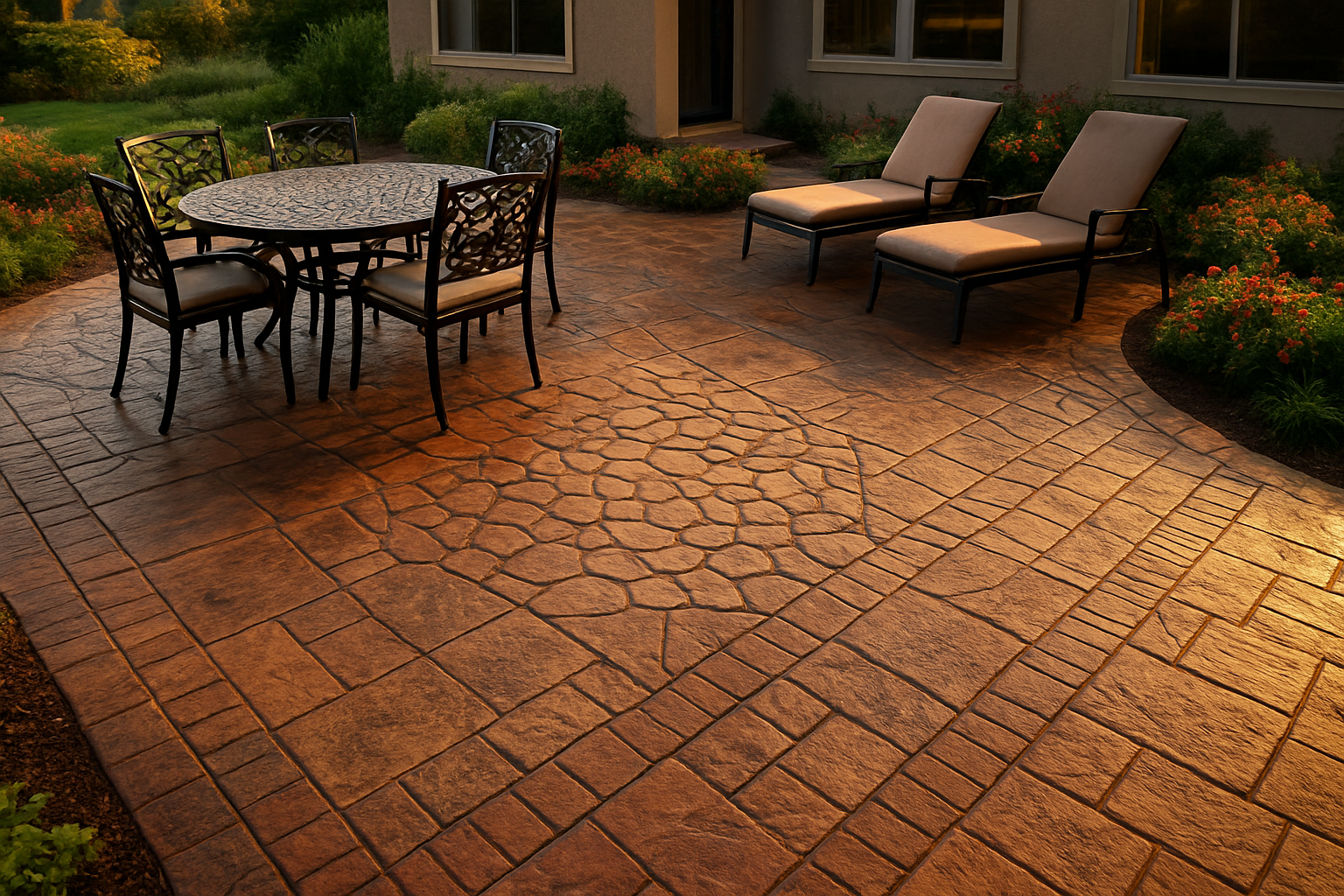
Stamped concrete offers incredible flexibility when creating your dream patio space. From slate and brick patterns that add texture to bold color combinations that make your outdoor area pop, the design possibilities are endless. You can customize everything from the size and layout to match your yard’s unique shape while choosing patterns that complement your home’s existing architecture.
The best part? You get all these design options without breaking the bank. Stamped concrete delivers the high-end look of natural stone or brick at a fraction of the cost, plus it requires minimal maintenance once installed. Start planning your stamped concrete patio project today and transform your backyard into the outdoor living space you’ve always wanted.